Parkinson’s disease is a progressive neurological disease, most often affecting people over 60, caused by a deficiency of dopamine, a substance that enables brain cells to communicate with one another. Parkinson’s disease, which causes the death of nerve cells in a part of the brain called the substantia nigra, often leads to tremors and abnormal movements. Treatments can help with the symptoms.
What Are the Symptoms of Parkinson’s Disease?
Parkinson’s symptoms can differ from person to person. In the early stages, they are very mild or go unnoticed. They often begin on one side of the body. As the disease progresses, symptoms remain more severe on the side where they started.
- Tremor: It usually starts in the hands and appears at rest. There may be uncontrolled movement of the thumb and tremors in the jaw and lips; over time, the leg muscles may also be affected.
- Slowed movement (bradykinesia): There is difficulty starting and continuing movements. People often walk with short steps. Muscle stiffness can cause pain. They have trouble getting up from a chair.
- Muscle stiffness: It can occur in any part of the body. Stiff muscles are painful and their movements are limited.
- Impaired balance and posture
- Loss of automatic movements: Such as unconscious blinking, smiling, or swinging the arms while walking.
- Speech problems: Speech gradually becomes monotone and loses its usual intonation.
- Changes in handwriting: People lose their usual handwriting and write in small, cramped, scrawled letters.
Other signs to watch for that may be among the symptoms of Parkinson’s disease:
- Depression or emotional changes
- Trouble chewing, swallowing, or speaking
- Sleep problems
- Constipation
What Causes Parkinson’s Disease?
It is a progressive clinical condition that results from damage, for unknown reasons, to the dopamine-producing cells that enable communication between cells in the brain. To distinguish it from other tremor disorders, dopamine treatment is started. A positive response strengthens the diagnosis of Parkinson’s. Why a person develops Parkinson’s disease cannot be determined precisely; it is thought that a range of causes, including genes and exposure to certain toxins, may be involved.
RISK FACTORS
- Age: It becomes more common over the age of 60.
- Heredity: Having the disease in close relatives increases the risk.
- Sex: It is more common in men.
- Exposure to toxins: Agricultural chemicals, especially herbicides and insecticides, increase the risk.
COMPLICATIONS
In addition to the symptoms above:
- Thinking and cognitive problems: These are seen in the later stages of the disease, such as dementia
- Depression and mood changes: Psychiatric support and antidepressants may be helpful.
- Difficulty eating, chewing, and swallowing,
- Sleep disorders,
- Waking up early at night, falling out of bed,
- Bladder problems: Difficulty controlling urine and urinating,
- Constipation (due to slowed bowel movements)
- Blood pressure changes: Sudden drops in blood pressure may cause lightheadedness.
- Impaired sense of smell,
- Fatigue and weakness,
- Pain,
- Sexual dysfunction may occur.
Diagnostic Methods for Parkinson’s Disease
There is no specific test for Parkinson’s. It is important for the physician to understand the patient’s history well and to assess the physical examination findings.
It is important for the physician to understand the patient’s history well and to assess the physical examination findings.
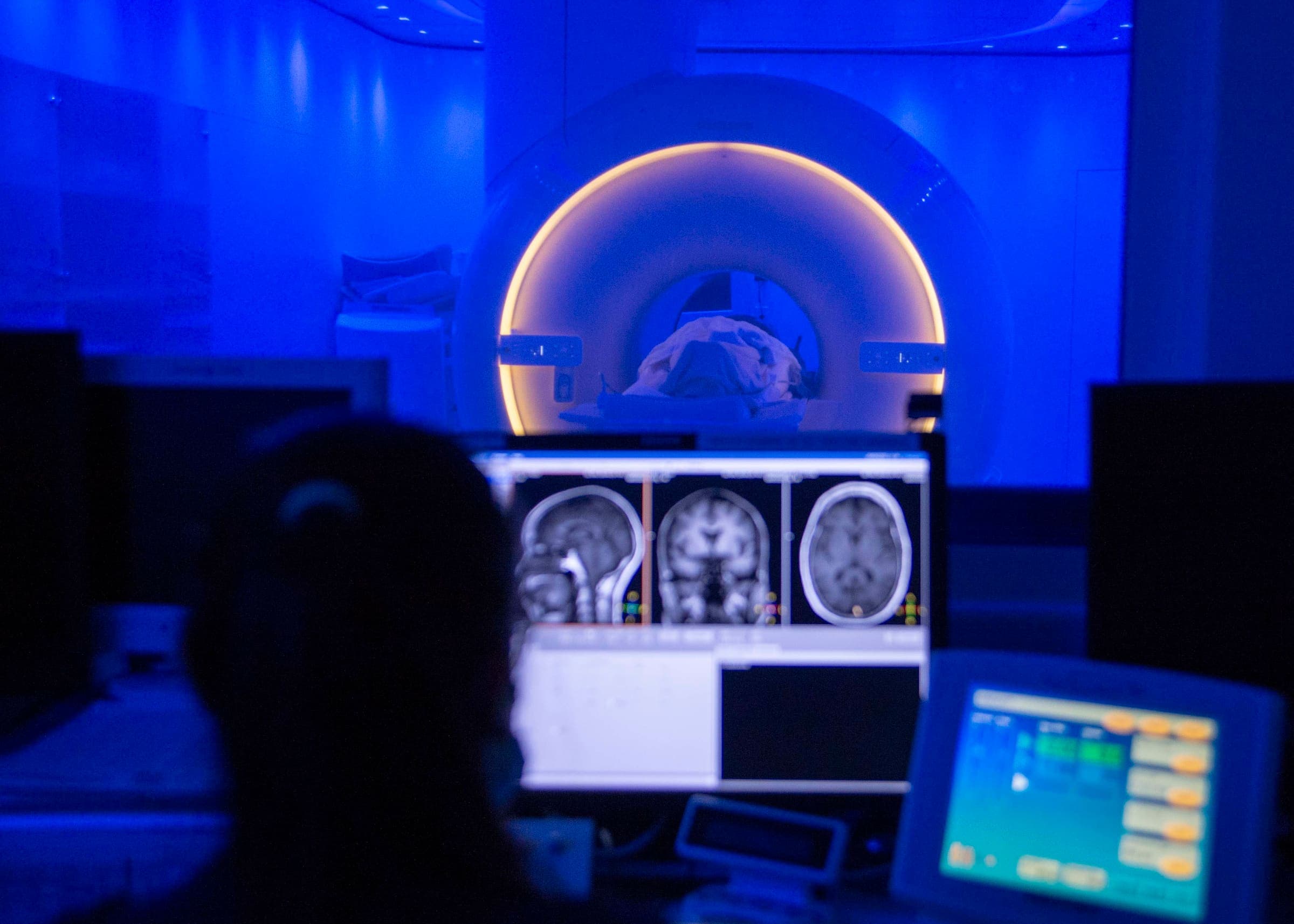
Radiological imaging: SPECT, MRI, PET, and brain ultrasound are supportive methods that help confirm the diagnosis.
Blood tests: These are important for ruling out other diseases that cause similar symptoms.
TREATMENT APPROACHES
Medical treatment: Medication to replace the dopamine that is underproduced in the brain is especially important in controlling symptoms. However, it must be closely monitored because of possible side effects. The medication can be given in different ways, such as by inhalation or intravenously. For the same purpose, dopamine agonists, MAO inhibitors, and similar medications are also used.
Surgical treatment: Surgery is preferred for patients who do not respond to medical treatment or who cannot be given an adequate dose because of medication side effects.

These include:
- Brain pacemaker (deep brain stimulation),
- Removal of the lesion in the brain (ablative methods), which can be performed today.
LIFESTYLE CHANGES
Eating habits: A fiber-rich diet (Mediterranean cuisine), omega-3s, and adequate fluid intake are strongly recommended.
Exercise: It is as important as medication for increasing muscle strength, maintaining balance, and reducing anxiety and depression. Activities such as walking, swimming, gardening, and dancing should definitely be part of your life.
Preventing falls: Getting help from a qualified physical therapy clinic, both to do the right physical exercises and to avoid falls, will make your life stronger.
Complementary medicine practices: Complementary medicine practices are also used alongside other treatment approaches, especially to control complications such as pain, fatigue, and depression.
These include:
- Massage,
- Tai chi exercise programs,
- Yoga,
- Meditation,
- Living with pets.
Once symptoms of Parkinson’s disease appear, it is usually a disease that progresses and can get worse. Symptoms can vary from person to person, and how quickly the disease worsens and how severe it can become also differ from one person to another. It may be easy to overlook or ignore early symptoms, but you should not neglect your health.
If you begin to notice the Parkinson’s symptoms described above, be sure to consult your doctor.
The information on our website is not intended to direct individuals to any treatment. Do not take any diagnostic or treatment steps without consulting your doctor. The content does not contain information about İzmir Can Hastanesi's therapeutic healthcare services.