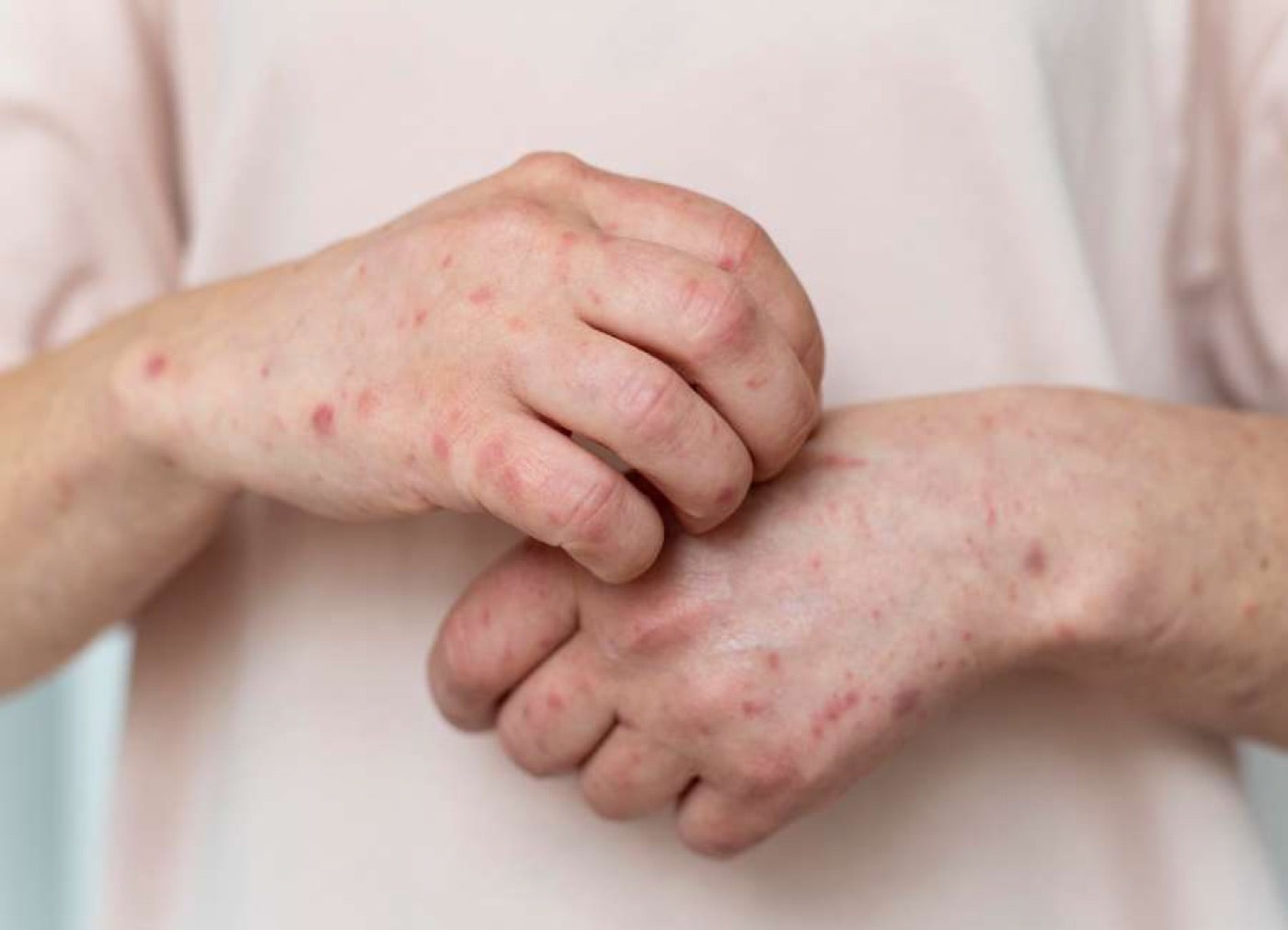
Scabies is a skin disease that spreads easily. Symptoms usually begin after 2–6 weeks. Common symptoms include itching, rashes and blisters. Intense itching is the clearest sign of the disease. Red rashes and blisters may also appear. Recognizing these symptoms early and seeing a doctor is important for treatment.
Early diagnosis and treatment can reduce the spread. It also minimizes potential risks. That is why it is important to know the symptoms and get treated right away.
What Is Scabies?
Scabies is a highly contagious skin infection. It is caused by a mite called Sarcoptes scabiei. This parasite burrows into your skin and causes itching and a rash. It digs tunnels under the skin and lays eggs, which helps it spread. Scabies is easily transmitted through close contact or shared items. It is more common in crowded and unsanitary places. It can spread anywhere on the body but is usually seen in areas such as between the fingers and on the wrists.
The main symptom of the infection is itching. The itching is especially worse at night and can disrupt sleep. Rashes may be red and raised. Thin lines may also be visible. If scabies is not treated, it can lead to infection and continue to spread to other people.
Symptoms of Scabies
Scabies is a very bothersome disease. The itching gets worse, especially at night, and makes it hard to sleep. Patients' daily lives are affected. In addition to itching, symptoms such as skin redness, rashes and blistering also occur. Scabies mites create tunnels (burrows) under the skin. These burrows are concentrated in areas such as between the fingers and on the wrists. The burrows are a distinctive sign of the disease and help make the correct diagnosis. Itching and rashes also usually appear in these areas.
Scabies symptoms may appear weeks after infection. During this time, the mites spread under the skin and make the symptoms worse. Blistering and bumps may indicate that the infection is progressing. These symptoms reduce quality of life and increase the risk of infection. Symptoms can vary from person to person. People with a weak immune system may suffer more. In addition, some people may have allergic reactions. Early diagnosis and treatment are very important for bringing the disease under control.
How Is Scabies Diagnosed?
Scabies is diagnosed after a careful review of symptoms and a physical examination. The doctor examines skin burrows and rashes on different parts of the body, looking especially at the fingers and toes, armpits and waist area. A sample taken by skin scraping is examined under a microscope. With this method, scabies mites and eggs can be detected. However, this method may not give an accurate result in every case. Scabies must be distinguished from other skin diseases. For this reason, it is important to see a dermatologist. Dermatologists can confirm the diagnosis of scabies with advanced examination methods.
The doctor examines skin burrows and rashes on different parts of the body.
Treatment of Scabies
Scabies is usually treated with creams or lotions. These products are applied to your skin. This kills the scabies mites and reduces itching. They are applied at night and washed off in the morning. Keeping your skin moist and soft is also important, as it supports a painless recovery during this process. In very difficult cases, doctors may turn to oral medication. The aim is to clear the infected areas of the body. The amount of medication varies depending on the severity of the condition. Everyone who has been in contact with the disease should be treated at the same time. This way, you prevent the disease from spreading. Treatment also applies to people who may have hidden symptoms. The clothes and bedding you have used should be washed in hot water. Otherwise, the mites may survive. A thorough cleaning of your home is also essential.
Complications of Scabies
If scabies is diagnosed very early and treated correctly, it can usually be well controlled. However, if the disease is not treated or treatment is delayed, some difficult situations may arise. One of these is bacterial infection. Scabies mites damage the skin, allowing bacteria to get under it. Serious infections such as impetigo and folliculitis may occur.
This disease causes intense itching. The skin becomes very dry and irritated. As a result, the skin becomes inflamed. In this case, the skin turns red, itches and flakes. Thickening and discoloration may also occur.
How to Protect Yourself from Scabies
Preventing scabies requires attention to personal hygiene. Washing your hands frequently is very important. Changing clothes and bedding often and washing them at a high temperature is an important protective measure. Staying away from infected people and not sharing items with them also reduces the risk. If scabies is suspected, infected items should be cleaned or set aside. Pillowcases, duvet covers, towels and clothes should be washed at at least 60°C (140°F). Items that cannot be washed should be kept in a plastic bag for at least 72 hours.
Scabies spreads more easily in communal living spaces. In these places, following hygiene rules and washing frequently is essential. People showing signs of scabies should not be touched, and they should be directed to treatment. The key to protecting yourself from scabies is being careful. Hygiene is important. Paying attention to nutrition and avoiding close contact with people who are infected are also important. It is vital that people showing symptoms get treatment right away.
The information on our website is not intended to direct individuals to any treatment. Do not take any diagnostic or treatment steps without consulting your doctor. The content does not contain information about İzmir Can Hastanesi's therapeutic healthcare services.