
Age-related macular degeneration is an eye disease that can blur your central vision. It occurs when aging damages the macula (the part of the eye that controls sharp, straight-ahead vision). The macula is part of the retina (the light-sensitive tissue at the back of the eye). Macular degeneration is a common condition and one of the leading causes of vision loss in older adults. Macular degeneration does not cause complete blindness, but losing your central vision can make it harder to see faces, read, drive, or do close-up work such as cooking or fixing things around the house.
Macular degeneration progresses very slowly in some people and faster in others. If you have early macular degeneration, you may not notice vision loss for a long time. That is why it is important to have regular eye exams to find out whether you have macular degeneration.
What Are the Types and Stages of Macular Degeneration?
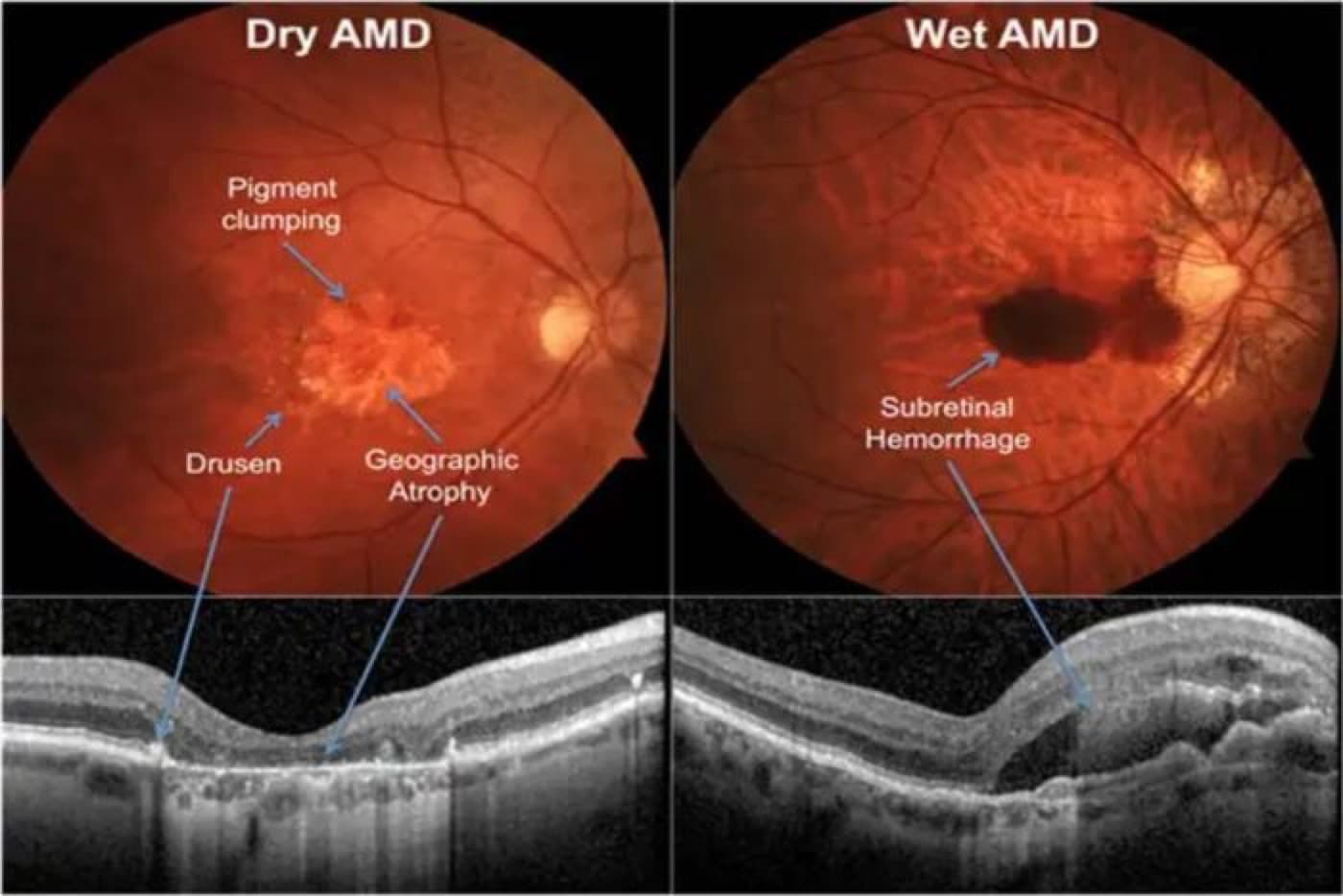
There are 2 types of macular degeneration: dry and wet.
Most people with macular degeneration have the dry form (also known as atrophic macular degeneration). This is when the macula gets thinner with age. Dry macular degeneration occurs in 3 stages: early, intermediate, and late. It usually progresses slowly over several years. There is no treatment for late dry macular degeneration, but you can find ways to make the most of your remaining vision. And if you have late dry macular degeneration in only 1 eye, you can take steps to protect your other eye.
Wet macular degeneration (also known as advanced neovascular macular degeneration) is a less common type of late macular degeneration that usually causes faster vision loss. Any stage of dry macular degeneration can turn into wet macular degeneration – but wet macular degeneration is always a late stage. It happens when abnormal blood vessels grow in the back of the eye and damage the macula.
What Are the Symptoms of Macular Degeneration?
The symptoms of macular degeneration depend on the stage. Dry macular degeneration occurs in 3 stages: early, intermediate, and late. It is a progressive disease — this means the symptoms usually get worse over time.
It is a progressive disease — this means the symptoms usually get worse over time.
- Early dry macular degeneration does not cause any symptoms.
- Intermediate dry macular degeneration: some people have no symptoms. Others may notice mild symptoms, such as slight blurriness in their central vision or trouble seeing in low light.
- Late macular degeneration (wet or dry type): many people notice that straight lines start to look wavy or crooked. You may also notice a blurry area near the center of your vision. Over time, this blurry area may grow larger, or you may see blank spots. Colors may also look less bright than before, and you may have more trouble seeing in low light.
Straight lines that look wavy are a warning sign of late macular degeneration. If you notice this symptom, see your eye doctor right away.

Who Gets Macular Degeneration?
Your risk of macular degeneration increases as you get older. People aged 55 and over are more likely to have macular degeneration. The risk of macular degeneration is also higher in people who:
If you are at risk because of your age, family history, or other factors, it is important to have regular eye exams. Ask your doctor how often you should have an eye exam. Early macular degeneration has no symptoms, so you should not wait for your vision to change.
How Can I Lower My Risk of Macular Degeneration?
Research shows that you may lower your risk of macular degeneration (or slow the related vision loss) by making these healthy choices:
- If you smoke, we recommend that you quit
- Get regular physical activity
- Maintain healthy blood pressure and cholesterol levels
- Eat healthy foods such as leafy green vegetables and fish
How Is Macular Degeneration Treated?
Treatment for macular degeneration depends on the stage and type. There is currently no treatment for early macular degeneration, so your eye doctor will probably just monitor the health of your eyes with regular eye exams. Eating a healthy diet, exercising regularly, and quitting smoking can also help. If you have intermediate macular degeneration in 1 or both eyes, special dietary supplements (vitamins and minerals) may keep it from progressing to late macular degeneration. If you have late macular degeneration in only 1 eye, these supplements may slow the progression of the disease in your other eye.
The information on our website is not intended to direct individuals to any treatment. Do not take any diagnostic or treatment steps without consulting your doctor. The content does not contain information about İzmir Can Hastanesi's therapeutic healthcare services.