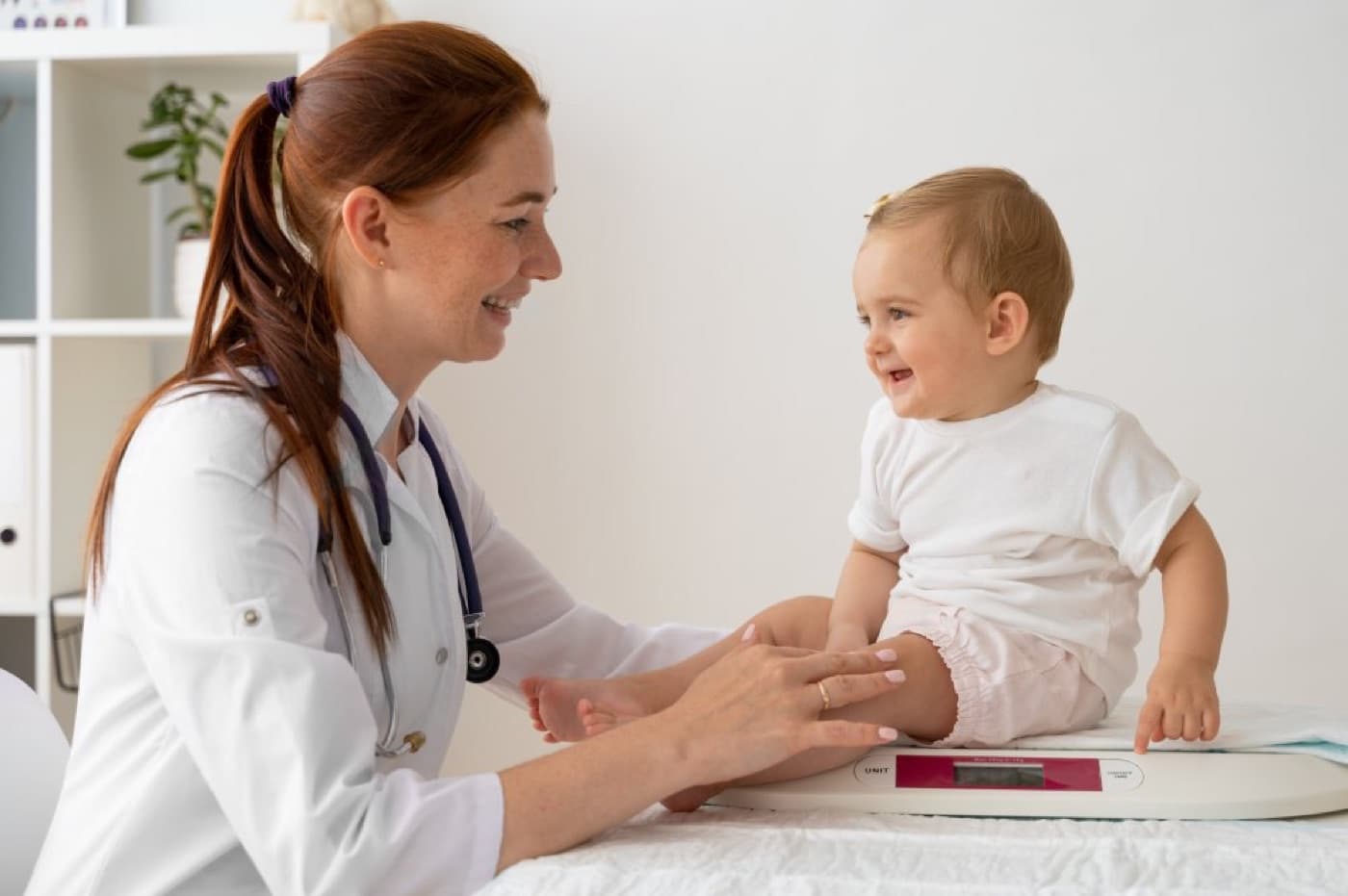
Breast milk contains all the energy and nutrients a baby needs for healthy growth and development. Because nothing can replace it in infant nutrition and development, it is an ideal, unique, living and, as a result, life-sustaining natural source of nourishment.
In addition, breast milk, which has high bioavailability and is easy to digest, provides many benefits to both baby and mother, above all in terms of nutrition, but also in terms of health, immunity, and psychological, social and economic well-being.
According to a statement by UNICEF on breastfeeding, “77 million newborns (one in every two babies) are not breastfed within an hour of birth, depriving them of the essential nutrients, antibodies and close contact with their mother that would protect them from disease and death.”
Why Are Breast Milk and Breastfeeding Important?
Because of its special composition, breast milk is easy for the baby to digest. Thanks to its infection-protective properties, it has a rich protein content. The fact that breast milk contains less protein and fewer minerals than cow’s milk protects the baby’s digestive system and kidneys from harm.
Minerals such as iron and zinc found in cow’s milk are also present in breast milk, but unlike cow’s milk, these minerals are absorbed better from breast milk. Breast milk also has a very high proportion of easily digestible unsaturated fatty acids. The essential fatty acids vital for the brain and nervous system are 8 times more abundant than in cow’s milk.
France Bégin, Nutrition Adviser at UNICEF, made very important statements on the importance of breast milk: “Delaying the first critical contact with the mother outside the womb for too long reduces the baby’s chances of survival, the mother’s milk supply and the chances of exclusive breastfeeding. Yet if all babies were fed only breast milk for six months after birth, it would be possible to prevent around 800,000 deaths every year.”
These statements have once again shown us and our valued mothers how essential breast milk and early initiation of breastfeeding are. The later breastfeeding begins, the higher the baby’s risk of dying within the first month. According to research in this area, not breastfeeding or delaying breastfeeding for 2–23 hours after birth increases the risk of death in the first 28 days by 40%, and a delay of 24 hours or more increases the risk of death by about 80%. Indeed, according to UNICEF, mortality rates among children who are not breastfed are 4–6 times higher than among those who are.
Another point highlighted by studies is that when babies are given foods that are less nutritious than breast milk, they breastfeed less often. This is a very negative situation that makes it harder for mothers to start and continue breastfeeding their babies.
What Are the Correct Breastfeeding Positions and Techniques?
Another question frequently asked by new mothers and their partners concerns correct breastfeeding techniques, and one of the most common questions is how a newborn should be breastfed. For correct breastfeeding, the mother should first hold her baby carefully and get into a breastfeeding position. The steps of the correct breastfeeding position are as follows:
- Choose a comfortable armchair or chair.
- The mother should sit with her back straight.
- Hold the baby so that the baby’s head is higher than the body and the face and body are facing the same direction.
- After bending the arm on the side of the breast being used at the elbow, place the baby’s head in front of the crook of the elbow. (The mother’s arm can be supported with a nursing pillow.)
- Bring the baby to the breast from below, moving upward.
- While supporting the breast with the other hand, the thumb should be on top to guide the breast.
- The mother should touch the nipple to the baby’s lips so that the baby opens their mouth to suckle.
- Once the baby opens their mouth, the nipple and the surrounding areola (the brown area) should be placed in the baby’s mouth together.
- Finally, the mother’s thumb on top should keep the baby’s nose from being blocked.
What Is Side-Lying Breastfeeding?
As mentioned in the previous section, what matters in correct breastfeeding techniques is that the baby’s head and body face the same direction and that the baby is close to the mother’s breast. In addition, during breastfeeding the baby’s head should be raised and no weight should be placed on it.
The side-lying technique is one of the most preferred breastfeeding positions. This position, which can make things easier for both mother and baby, can be especially comfortable for mothers who have had a cesarean delivery and therefore have difficulty moving.
Nursing pillows and nursing covers can also be used for comfort while breastfeeding. Of course, a suitable nursing pillow should be chosen. The pillow should be easy to carry and comfortable for the mother. This way, there is no pain during breastfeeding and the mother can breastfeed comfortably.
How Long Should Breastfeeding Last?
As mentioned in our introduction, newborns should be breastfed as soon as possible after birth, and after that, the frequency and duration of feeds should be adjusted to the baby’s demand. Milk may not come in right away during the first feeds; in this case, a common mistake should be avoided, namely the baby should not be given any other food. The only thing to do in this situation is to continue breastfeeding. Especially during the first 2 months, the baby should be offered the breast whenever they want.
So how long should a newborn breastfeed, and how?
At first, breastfeeding from both breasts alternately is considered beneficial for increasing milk supply. Once the milk supply increases as a result of this alternation, breastfeeding from one breast per feed may be enough. The goal should be for the baby to empty one breast completely at each feed. This usually takes 10–15 minutes.
At first, breastfeeding from both breasts alternately is considered beneficial for increasing milk supply.
Breastfeeding times or frequency by month:
- Babies who are 1 month old are usually breastfed 8–12 times in 24 hours.
- As the baby grows, the number of feeds may decrease somewhat; however, breastfeeding should still follow the baby’s demand.
- Between the 3rd and 6th months, babies are usually breastfed about 7–9 times in 24 hours; this number can vary from baby to baby.
- After the 6th month is completed, complementary foods can be introduced.
Why Do Babies Refuse or Stop Breastfeeding?
- Starting breastfeeding late
- Not breastfeeding frequently
- Avoiding night feeds
- Short feeds
- Incorrect latch
- Using bottles and pacifiers
- Starting complementary foods early
- The mother’s lack of self-confidence
- The mother’s anxiety, worry and stress
- Not accepting the baby
Benefits of Breastfeeding for Mothers and Babies
According to an article published on the website of the Ministry of Health General Directorate of Public Health for World Breastfeeding Week (August 1–7), the benefits of breastfeeding are as follows.
Benefits of Breastfeeding for Mothers


- It helps the mother recover quickly after giving birth,
- It reduces the risk of ovarian and breast cancer,
- It lengthens the interval between pregnancies,
- It helps the mother return to her pre-pregnancy weight quickly,
- It helps the mother lead a healthy, good-quality life.
Benefits of Breastfeeding for Babies
- It supports sensory and cognitive development in babies,
- It protects against infectious diseases such as diarrhea, pneumonia, otitis media and urinary tract infections,
- Exclusive breastfeeding reduces infant deaths due to diarrhea and pneumonia,
- It speeds up recovery from illness,
- It reduces the risk of sudden infant death syndrome,
- It protects against asthma, eczema and allergic diseases,
- It reduces the risk of high blood pressure in childhood,
- It reduces the risk of obesity in childhood, adolescence and adulthood,
- It reduces the risk of type II diabetes, cardiovascular disease and stroke later in life.
What Is Mother–Baby Skin-to-Skin Contact and How Is It Done?
The positive effect of skin-to-skin contact (SSC) on mother and baby development has become a fact known to many parents. Research shows that skin-to-skin contact between mother and baby established at the moment of birth increases breastfeeding rates twofold. So what is skin-to-skin contact and how is it done? You can read the details of skin-to-skin contact, the first step in building a strong bond between mother and baby, in this article.
How Can Breast Milk Supply Be Increased?
Drinking 10–12 glasses of water a day is one of the main factors that increase breast milk supply. Scientific studies have shown that certain foods and herbs in particular increase breast milk. Foremost among these is fennel. Other milk-boosting herbs after fennel include stinging nettle, basil and rosemary.
A calm environment, healthy nutrition and the mother’s acceptance of the baby are other factors that help increase breast milk. The baby’s suckling at the breast also has a milk-boosting effect. Healthy eating during the breastfeeding period, with meals made up of protein, carbohydrates, fruits and vegetables, as well as good sleep and breastfeeding the baby frequently, also help increase breast milk supply. Therefore, eating a healthy and varied diet is vitally important. The list of milk-boosting foods should be tailored to the mother and her allergy status. For this reason, it is vitally important to consult your doctor to create a nutrition plan.
How Should Breast Milk Be Stored?
After expressing, breast milk should be stored under hygienic conditions. Glass containers should be preferred for storage. Breast milk storage bags can also be used as an alternative to glass containers. In glass containers, breast milk can be stored for 3 hours at room temperature (19–26°C), 3 days at the back of the refrigerator, not in the door (+4°C), or 3 months in the deep freezer (-18°C).
If breast milk has been stored in the refrigerator or deep freezer, it should be thawed at room temperature or in warm water. To speed things up, it should never be thawed on the stove, in the oven or in the microwave, because breast milk thawed this way loses its nutritional value.
Source:
https://www.unicefturk.org/yazi/haber-annesutu
The information on our website is not intended to direct individuals to any treatment. Do not take any diagnostic or treatment steps without consulting your doctor. The content does not contain information about İzmir Can Hastanesi's therapeutic healthcare services.