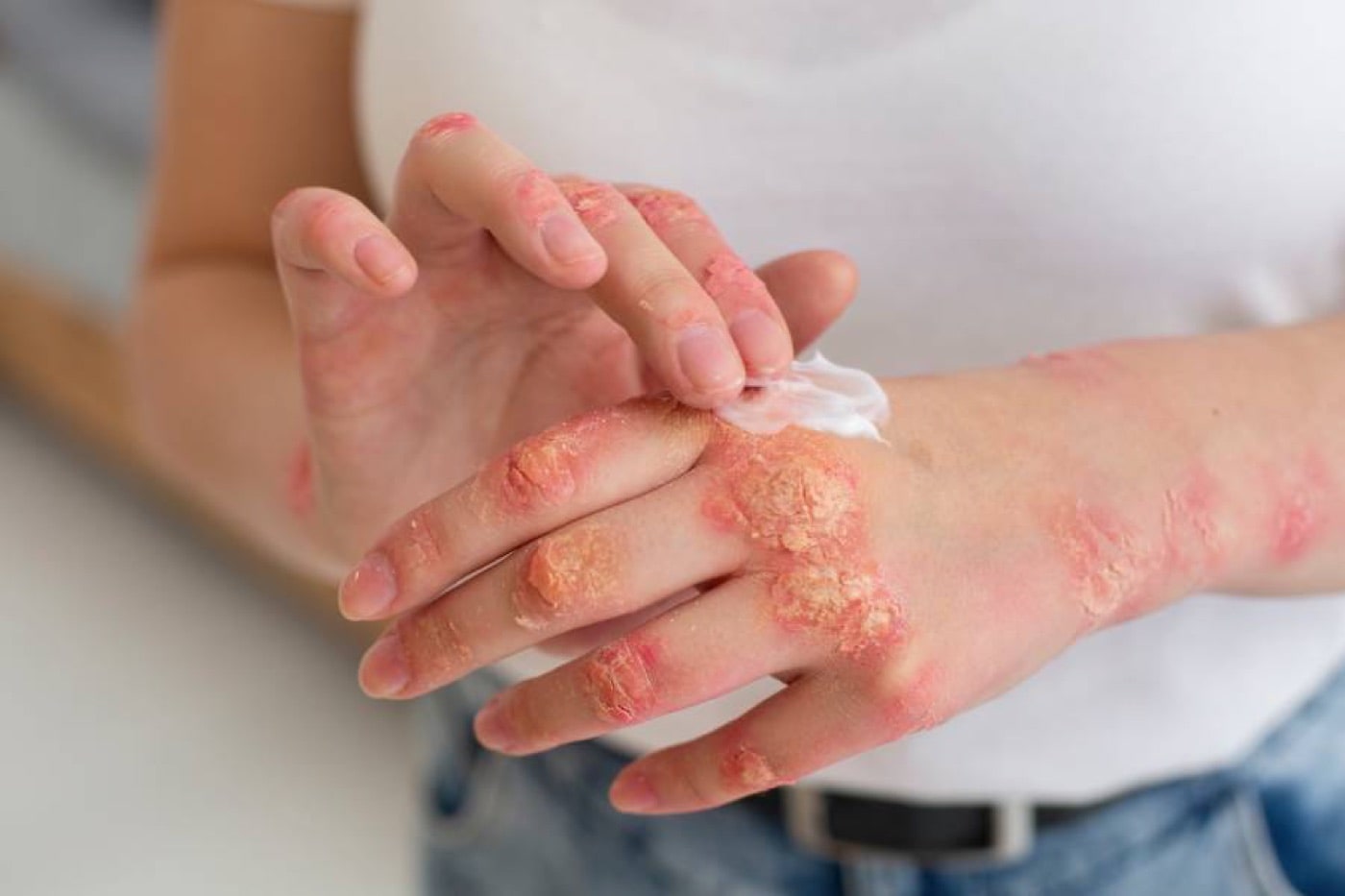
Eczema is a common skin condition that causes itching, redness, dry patches and infection. It is a type of dermatitis, a group of conditions that can inflame or irritate your skin. The most common type is atopic dermatitis, or atopic eczema. "Atopic" means you are more likely to develop allergic conditions such as asthma and hay fever. Most people can manage their symptoms by getting treatment and avoiding irritants, meaning things that can affect your skin when you come into contact with them. Intense itching is the most common symptom of eczema, and scratching the itch makes it even worse.
What Are the Symptoms of Eczema?
Eczema can look different in everyone, and flare-ups will not always occur in the same area. Whichever area of your skin eczema affects, it is almost always itchy. The itching can sometimes start before the rash appears.
Eczema rashes:
One of the first signs of eczema is a rash that looks different in different people. In people with darker skin, the rash may be purple, brown or gray. If you have lighter skin, the rash may look pink, red or purple.
Eczema symptoms in babies:
In babies, the itchy rash can lead to oozing, crusting patches, mostly on the face and scalp. It can also appear on the arms, legs, back and chest. Newborns may show symptoms within the first few weeks or months after birth.
Eczema symptoms in children:
Children and teenagers usually develop a rash in the creases of their elbows, behind their knees, or on their neck, wrists or ankles. The rash becomes scaly and dry.
Eczema symptoms in adults:
Your skin will probably be very dry, thick or scaly. In people with lighter skin, these areas may initially look reddish and then turn brown. In people with darker skin, eczema can affect skin pigment, making the affected area lighter or darker. In the early stages, it may look pink, brown or purple rather than red. In some people of color, eczema may appear as small bumps resembling goosebumps. Itching may be worse, and dry skin is more likely. Black individuals tend to have dark circles around their eyes.
In people with darker skin, eczema can affect skin pigment, making the affected area lighter or darker.
Flare-ups can sometimes last a few days or weeks.
What Are the Types of Eczema?
Eczema is a skin disease caused by inflammation of the skin, and there are many different types. Here are the most common types of eczema:
- Atopic Dermatitis: The most common type of eczema. It usually begins in childhood and is often associated with a family predisposition. It is characterized by dry, itchy and red skin.
- Contact Dermatitis: Develops when the skin is exposed to a particular substance. There are two types:
- Allergic Contact Dermatitis: Occurs when the skin comes into contact with allergens.
- Irritant Contact Dermatitis: Occurs when the skin is exposed to irritating substances.
- Seborrheic Dermatitis: Usually seen in oily areas of the skin (for example, the scalp, face and ears). In babies, it is known as "cradle cap." It shows up as dandruff, scaling and redness.
- Dyshidrotic Eczema: Shows up as small, fluid-filled blisters on the fingers and toes, palms and soles of the feet. These blisters can be itchy and painful.
- Nummular (Discoid) Eczema: Shows up as round, coin-shaped rashes. It is usually seen on the legs, arms, back and buttocks, and is dry and itchy.
- Stasis Dermatitis: Usually occurs on the legs and develops due to circulation problems caused by varicose veins. Redness, itching, swelling and open sores may form on the skin.
- Neurodermatitis: Characterized by persistent itching and irritation in one area of the skin. Frequent scratching leads to thickened, crusty skin.
- Asteatotic Eczema (Xerotic Eczema): More common in older adults, this type develops when the skin becomes excessively dry and cracked. It shows up as dry, flaky, itchy skin.
Treatment and management strategies can differ for each type of eczema, so it is important to see a dermatologist for an accurate diagnosis and an appropriate treatment plan.
How Is Eczema Diagnosed?
No test can detect eczema. Your doctor will most likely make a diagnosis by looking at your skin and asking a few questions. Because many people with eczema also have allergies, your doctor may order some allergy tests to look for irritants or triggers. Children with eczema are especially likely to undergo allergy testing.
If your doctor diagnoses you with eczema, you may want to ask them the following:
- What is the best way to moisturize my skin? Can I use over-the-counter products, or do you need to prescribe something?
- Do I need to buy special soaps, lotions and laundry detergent? Will fragrance-free or sensitive-skin products help?
- Are there foods I should avoid to keep flare-ups away?
- Are there fabrics I should not wear? Which fabrics should I wear?
- Do pets make symptoms worse?
- Can I still exercise if sweating makes the condition worse?
- What should I do if my symptoms do not improve, or if I get an infection from scratching my skin?
- Does stress lead to flare-ups?
- Is it common to go a long time without symptoms?
- Are there ways I can treat my skin to reduce my chances of having another flare-up?
The information on our website is not intended to direct individuals to any treatment. Do not take any diagnostic or treatment steps without consulting your doctor. The content does not contain information about İzmir Can Hastanesi's therapeutic healthcare services.