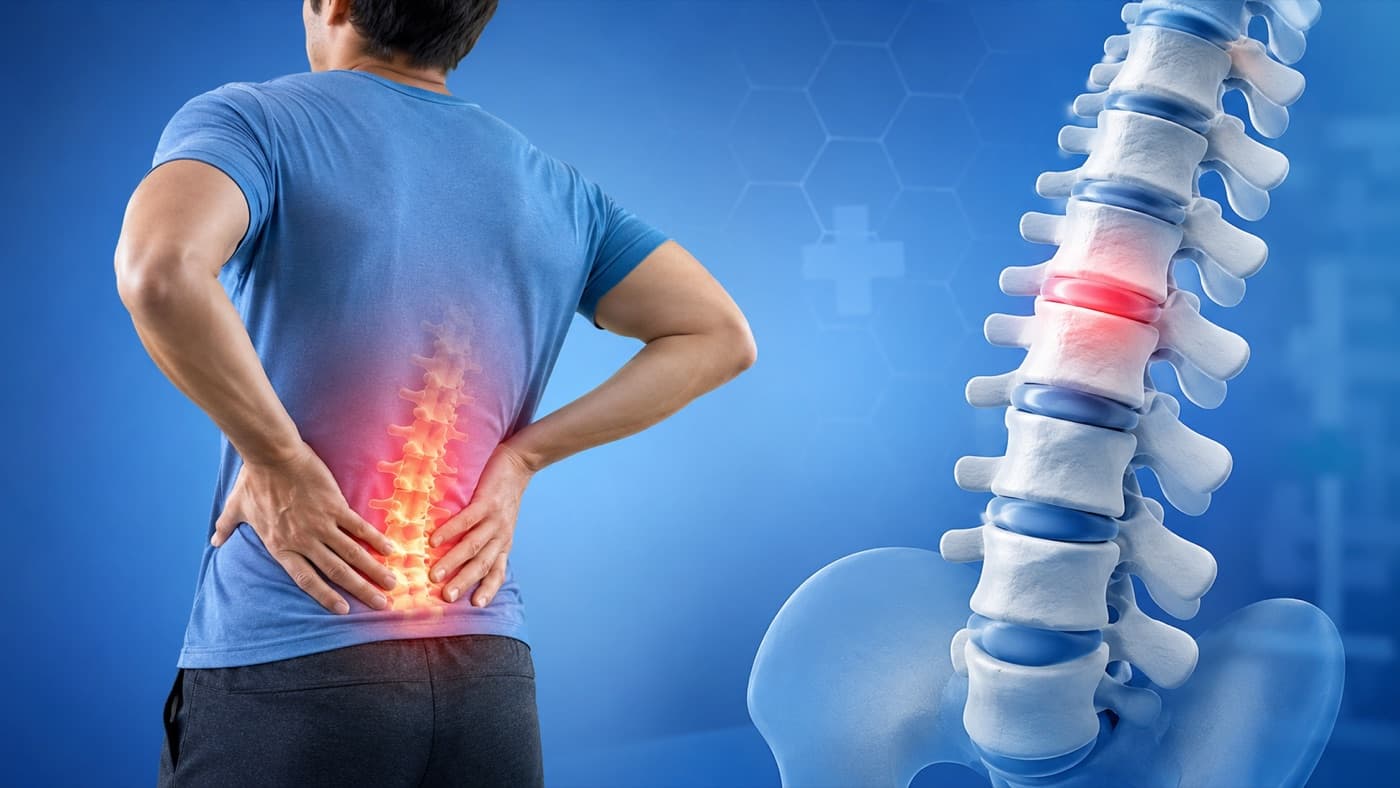
Contrary to popular belief, lumbar and cervical disc herniations are not often treated with surgery. Only about 5% of lumbar and cervical herniations require an operation. The vast majority of the rest can be treated with medication, physical therapy, manual therapy and patient education. It should not be forgotten, however, that herniations also have irreversible stages. The decision for surgery is made by reviewing magnetic resonance (MRI) images and examining the patient.
In lumbar and cervical disc herniation, symptoms arise when the cartilage discs between the vertebrae, which provide flexibility, bulge out of their normal position and press on the nerve roots (and, in cervical herniation, sometimes on the spinal cord). Depending on the nerve affected, burning, a cold sensation, tingling, numbness, electric shock-like sensations and loss of strength may develop in the arms or legs. Surgery may be needed, especially if there is loss of strength.
The information on our website is not intended to direct individuals to any treatment. Do not take any diagnostic or treatment steps without consulting your doctor. The content does not contain information about İzmir Can Hastanesi's therapeutic healthcare services.