Today, innovations in eye health offer revolutionary solutions for treating refractive errors. Foremost among these innovations, smart lens technology is regarded as an ideal method for correcting common refractive errors such as myopia, hyperopia and astigmatism. With their multifocal design, these lenses allow the eye to see clearly at different distances; they have also become a preferred option for cataract treatment and stand out for their ability to improve patients’ quality of life. The innovative approach offered by smart lenses is a promising development for many people with eye problems.
What Is a Smart Lens and How Does It Work?
Smart lens implantation is a modern refractive surgery method performed using intraocular lenses. This treatment was developed specifically to correct vision problems. Smart lenses mimic the functions of the eye’s natural lens and are designed to focus light properly onto the retina. These lenses are personalized for each patient to suit the structure of their eye and their visual needs.
Implanting these lenses is a procedure that requires a high degree of precision and is performed by a specialist surgeon. Smart lenses are considered an important innovation in refractive surgery, and this method can significantly reduce patients’ need for glasses or contact lenses; however, some patients may still need glasses for certain tasks. The successful integration of these intraocular lenses has long-term positive effects on eye health and quality of vision.
Advantages of Smart Lenses
Smart lenses offer revolutionary advances in eye health and quality of vision. This technology is designed to meet the various visual needs people encounter throughout the day. By providing significant improvements in quality of vision and allowing details to be seen more clearly, smart lenses considerably enhance quality of life.
The high success rate of smart lenses attests to the reliability and effectiveness of this technology. Various clinical studies show that smart lenses deliver successful results in correcting vision problems. This increases confidence in the method among both doctors and patients.
Offering a long-lasting solution, smart lenses eliminate or reduce the need for glasses or contact lenses in many vision problems. In the long run, this means both cost savings and less maintenance, allowing people to lead freer and more comfortable lives. These advantages make smart lenses a popular choice among eye health solutions.
Refractive Errors and Smart Lenses
Refractive errors are common problems that affect the clarity of vision. These include myopia, hyperopia and astigmatism. Myopia causes distant objects to look blurry, while hyperopia makes it difficult to see near objects clearly. Astigmatism, on the other hand, causes images to look blurry at both near and far distances because of the irregular shape of the cornea.
Astigmatism, on the other hand, causes images to look blurry at both near and far distances because of the irregular shape of the cornea.
Smart lens technology is specially designed to correct these refractive errors. These high-tech lenses significantly improve quality of vision by focusing light onto the retina. Because they can be customized for different vision problems, including astigmatism, they can be tailored to patients’ individual needs. These lenses work in harmony with the eye to provide clearer and sharper vision.
- For myopia: By focusing light at a more accurate point on the retina, it helps distant objects be seen more clearly.
- For hyperopia: It allows near objects to come into focus, so reading and other close-up tasks can be done comfortably.
- For astigmatism: Special toric (astigmatism-correcting) designs provide clearer vision by compensating from inside the eye for the refractive error caused by the irregular cornea, without changing the shape of the cornea itself.
In suitable patients, smart lenses can be a comfortable option that reduces dependence on glasses or contact lenses. However, they are not suitable for every patient, and side effects such as halos or glare around lights at night may occur; for this reason, the decision should be made together with the doctor after a detailed eye examination.
When Should a Smart Lens Be Chosen?
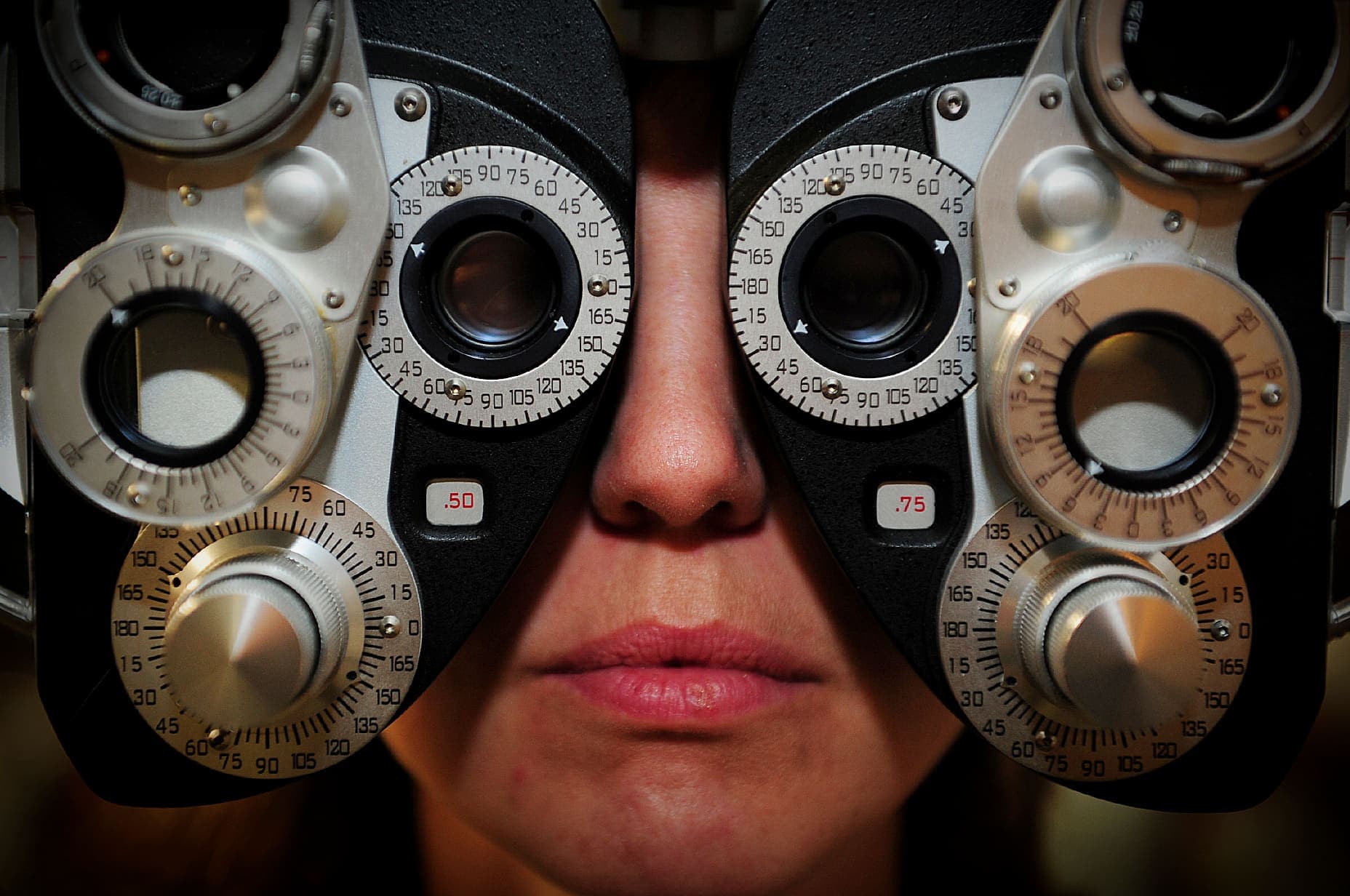

Smart lenses are recommended especially for people who have certain vision problems and for whom they are ideal in terms of the health of the eye’s lens, taking age into account. This technology is an innovative solution that corrects vision problems and gives the user clear vision. Some specific situations to consider when choosing a smart lens are as follows:
- Intolerance of and discomfort with contact lenses and glasses: Smart lenses are ideal for people who are bothered by glasses or contact lenses or who cannot achieve adequate quality of vision with them.
- People whose daily lives are significantly affected by vision problems: Particularly in people with vision problems such as high myopia or hyperopia, smart lenses can significantly improve quality of daily life.
- Age and the health of the eye’s lens: As we age, the eye’s natural lens loses its flexibility, which affects quality of vision. By offering a solution to age-related vision problems, smart lenses promise a younger visual experience.
- General health suitable for surgery and realistic expectations: Smart lens implantation requires a surgical procedure. It is therefore suitable for people who are physically fit for this procedure and who have realistic expectations about recovery after surgery.
Smart lenses offer a state-of-the-art solution for correcting vision problems, addressing age-related decline in vision and generally supporting the health of the eye’s lens. People in the situations described above are therefore advised to consider them as an opportunity for their eye health.
Cataract Treatment and Smart Lenses
Cataract is an eye condition that usually develops with aging and can seriously reduce quality of vision. In this condition, the eye’s lens loses its transparency, preventing clear vision. Cataract surgery involves replacing the clouded natural lens with an artificial lens. These artificial lenses are called intraocular lenses, or more commonly, implanted lenses. Lens replacement is regarded as one of the most effective treatments offered by modern medicine, allowing patients to regain much of their visual function.
Smart lenses are intraocular lenses with world-class technology used in cataract surgery. With their multifocal design, these lenses make it possible to see both near and far clearly. These features, which improve clarity at long distances and can allow many patients the comfort of reading without glasses, make smart lenses an attractive option for cataract treatment. These lenses, which can be customized to the patient’s needs, have the potential to improve a person’s quality of life.
Patients’ greatest expectation after cataract surgery is uninterrupted, high-quality vision. Smart lenses play an important role in meeting this expectation and aim to provide high quality of vision after lens replacement. This innovative technology, which can offer solutions tailored to each patient’s eye structure and needs, also speeds up rehabilitation after cataract surgery, providing a more comfortable recovery.
The information on our website is not intended to direct individuals to any treatment. Do not take any diagnostic or treatment steps without consulting your doctor. The content does not contain information about İzmir Can Hastanesi's therapeutic healthcare services.