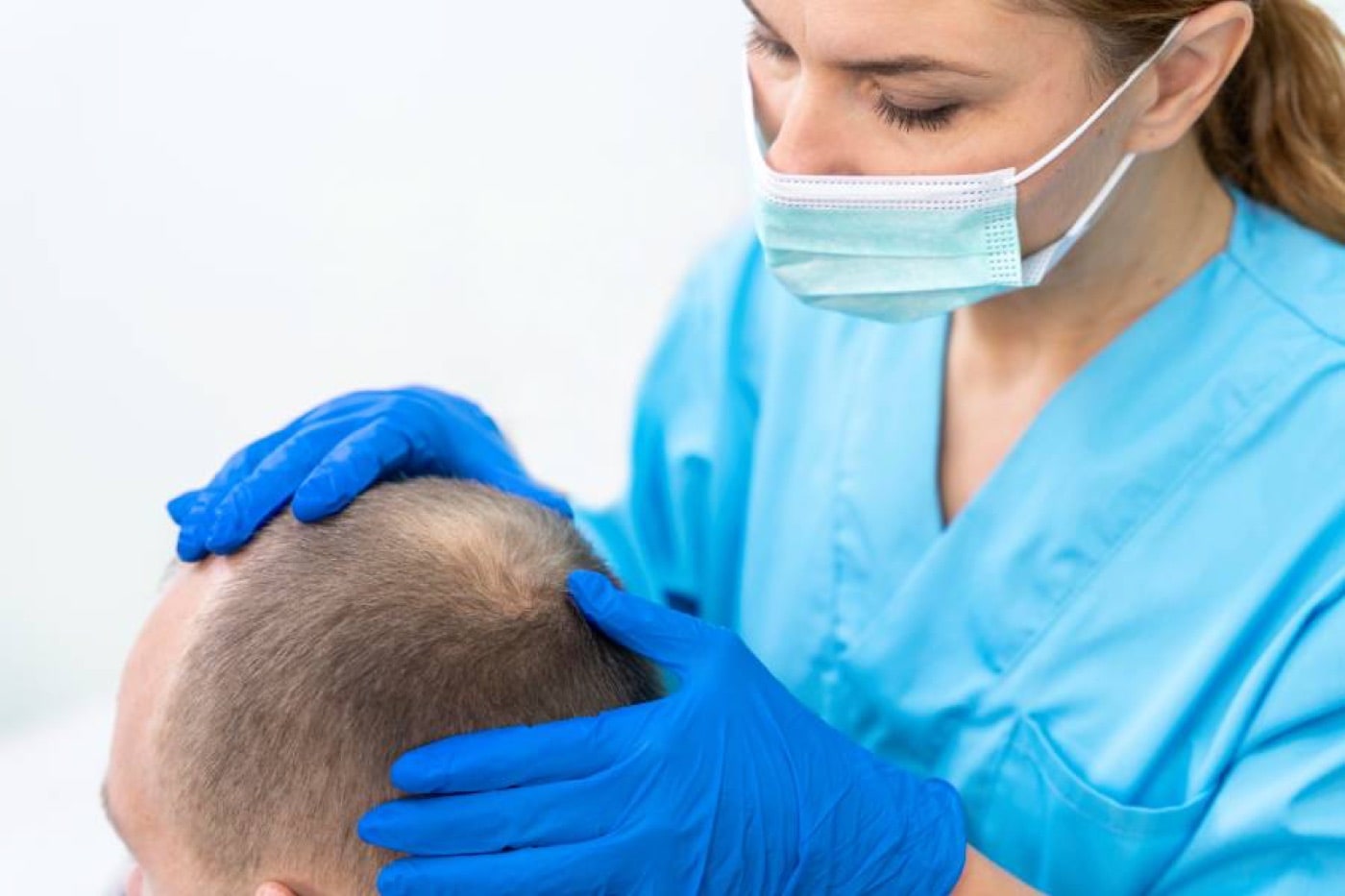
For a hair transplant to achieve the desired result, the period after the operation is as important as the operation itself. In a well-planned hair transplant, even a minor problem during the healing process can negatively affect the outcome. That is why you should take the instructions your doctor gives you seriously and follow them carefully.
Read the following points carefully so that your wounds heal quickly and the transplanted hair follicles are not damaged.
- Be sure to take the medications prescribed by your doctor exactly as directed.
- Do not drive for 6 hours after the operation.
- For one week, sleep on a high pillow with your head upright. Do not sleep on your right or left side. Protect the transplanted area. Using a travel (neck) pillow will help keep your movements more controlled.
- You may have mild swelling on your forehead after the operation. This is because the medications injected under the skin during the operation move downward with gravity. To keep it under control, do not bend your head forward for 3–4 days. Applying ice packs to your forehead and taking the medications on your prescription regularly will make this swelling go away very quickly. Even if you do nothing, the swelling will resolve on its own within two days.
- Protect the transplanted area from rubbing, scratching, and impact.
- For one week after the hair transplant, do not do strenuous work or lift heavy objects, and avoid excessive excitement and sexual intercourse.
- Do not drink alcohol until you have finished your antibiotics.
- After the operation, there may be pinkish seepage from the area where the follicles were harvested. This is due to the anesthetic medications injected under the skin draining out. If there is heavy, dark bleeding that continues into the next day, inform your doctor.
- Do not consume coffee, strong tea, or other caffeinated drinks for 3 days. Do not smoke or use recreational substances for 1 month, or at least limit them.
- Do not wash or wet the transplanted area until the first wash day (3 days).
- For 1 week, choose clothes that button or zip up the front. The friction from putting on and taking off clothes over your head will damage your hair.
- Do not do strenuous exercise for 1 month; you can start light walking after day 15.
- Pay attention to your diet after the hair transplant. For the first week, stay away from very fatty, hot, and spicy foods to avoid breakouts in the transplanted area. Do not eat foods that cause constipation.
- After one week, you may wear a hat as your doctor instructs.
- Do not wear a hard hat for 9 days or a motorcycle helmet for 15 days.
- If you work in a dusty, dirty environment, wear a hat for 1 month. Take it off whenever you finish work to let the area breathe.
- In summer, avoid direct sunlight between 11 a.m. and 4 p.m. Stay in the shade or wear a hat.
- Do not go into the sea for 1 month, or into a Turkish bath, pool, sauna, or tanning bed for 3 months.
- Do not use a hair dryer, comb, gel, or topical products for 3 months, or hair dye for 5 months.
- Do not cut the transplanted area with clippers for 6 months. Clippers can be used on the donor area once it has healed; the transplanted area can be trimmed with scissors without pulling the hair.
- If you have oily skin, small pimples may appear in the transplanted area. In this case, inform your doctor and do not try to pop them yourself.
- If these abscesses grow or take the form of ingrown hairs, you must go for a check-up. If you live in another city or abroad, take a photo of the area and send it to your doctor by email or WhatsApp.
- Use the shampoos recommended by your doctor for 3 months. Contact us if you change shampoos.
- If you experience trauma or a blow to the head, inform your doctor and go for a check-up if possible.
- Go for regular monthly check-ups. If you can’t make it, send photos to get information about your progress.
- Do not use supplements, oils, or similar products based on hearsay without consulting your doctor.
Dressing Changes and Washing After a Hair Transplant
Day 1 – Dressing: The dressing is changed by the doctor or nurse. The bandage on the donor area is removed and an antibiotic cream is applied to the area where the follicles were harvested.
Day 2 – Dressing: A thin layer of antibiotic cream is applied to the area where the follicles were harvested. The donor area does not need to be covered again; this is done once a day.
Day 2 – Dressing: A thin layer of antibiotic cream is applied to the area where the follicles were harvested.
Day 3 – First wash: The lotion recommended by your doctor is applied to the transplanted area and left on for 15–20 minutes. The area is then washed with baby shampoo using a very gentle press-and-lift motion of the hand. After drying, the healing cream recommended by your doctor is applied to the donor area where the follicles were harvested.
Days 4, 5, and 6 – Washing: The lotion is left on for half an hour, and the hair is washed the same way as on the first day.
Days 7, 8, and 9 – Washing: The lotion is left on for 40–60 minutes. The hair is washed with slightly more pressure, rubbing in the direction of the transplanted hair.
Day 10 – Scab removal: The lotion is left on for 2 hours, then the scabs are removed by applying increasing pressure with a clean, sterile gauze pad, and the hair is washed.
- If possible, have all dressing changes and washes done at the hair transplant center.
- Once the scabs are gone, there is no need to apply the lotion.
- Wash your hair with lukewarm water. Do not use very hot or very cold water.
- Hair is washed with baby shampoo for 1 month. Do not apply shampoo directly to the scalp; lather it in your hands first and then apply it to your head.
- After 15 days, wash using gentle circular pressure with your fingertips.
- For 15 days, dry only with paper towels.
- You can wash your hair as often as you normally do.
- If the shampoo you use causes dandruff, significant redness, or oiliness, inform your doctor.
- Take care to follow the hair-washing instructions.
The information on our website is not intended to direct individuals to any treatment. Do not take any diagnostic or treatment steps without consulting your doctor. The content does not contain information about İzmir Can Hastanesi's therapeutic healthcare services.