An eyeglass prescription contains critical information about your eye health and the quality of your vision. On the prescription, you may come across abbreviations such as SPH, CYL and AXIS. Knowing what these abbreviations mean and improving your ability to read an eyeglass prescription play a vital role in monitoring your eye health.
Eye care services offered in İzmir in particular help you understand what the values on your prescription mean. This information makes it easier for you to choose the glasses or contact lenses that suit you best.
What Is an Eyeglass Prescription?
An eyeglass prescription details your refractive power (eye prescription numbers), the degree of astigmatism and any other refractive errors, as determined by the examination and measurements performed by an eye doctor. This prescription is necessary for your lenses to be made according to your specific needs. Different refractive errors such as myopia, hyperopia or presbyopia are therefore expressed on the prescription with different values and abbreviations.
For example, if myopia (nearsightedness) has been diagnosed, the prescription value is indicated with a “-” sign. In the case of hyperopia (farsightedness), the value is shown with a “+” sign. Conditions such as astigmatism and presbyopia are also clearly specified on the prescription, allowing the lenses to be made correctly.
Every piece of information on your prescription is taken into account to protect your eye health and provide the best possible vision. For this reason, it is very important that your eyeglass prescription is read correctly and its instructions are followed.
The Eyeglass Prescription and Eye Health
SPH CYL AXE
R: -1.00 -2.25 165
L: -1.25 -2.50 15
R->RIGHT-> The right eye prescription.
L-> LEFT-> The left eye prescription.
An eyeglass prescription is vitally important not only for meeting optical needs but also for the overall assessment of your eye health. Regular eye examinations and an up-to-date prescription play a fundamental role in maintaining the quality of your vision. In particular, this allows potential eye problems that may arise with advancing age to be diagnosed early.
Keeping your eyeglass prescription current allows you to take precautions against serious vision problems in the future. Accurate and timely eye examinations are essential for protecting your eye health in the long term. For this reason, you should not forget to update your prescription regularly.
An Eye Doctor in İzmir for Your Eyeglass Prescription
Finding a qualified eye doctor in İzmir is a critical step in having your eyeglass prescription prepared correctly. An experienced eye doctor in İzmir will give you detailed information about your eye health and help create the prescription that suits your needs. When choosing an eye clinic in İzmir, it is important to consider the technological facilities the clinic offers and the experience of its doctors.
When choosing an eye clinic in İzmir, it is important to consider the technological facilities the clinic offers and the experience of its doctors.
When choosing an eye doctor, it is important to pay attention not only to the doctor's experience but also to patient feedback. This feedback provides valuable clues for understanding the quality of service offered by the doctor and the eye clinic in İzmir. Detailed eye examinations carried out in clinics equipped with state-of-the-art devices help you obtain the most accurate eyeglass prescription.
Choosing the most suitable eye doctor in İzmir for your eye health will help you prevent eye conditions in the long term and improve your quality of life. For this reason, when researching eye clinics in İzmir, you should pay attention to the doctors' areas of expertise and the clinic's facilities.
How to Read Your Eyeglass Prescription Correctly
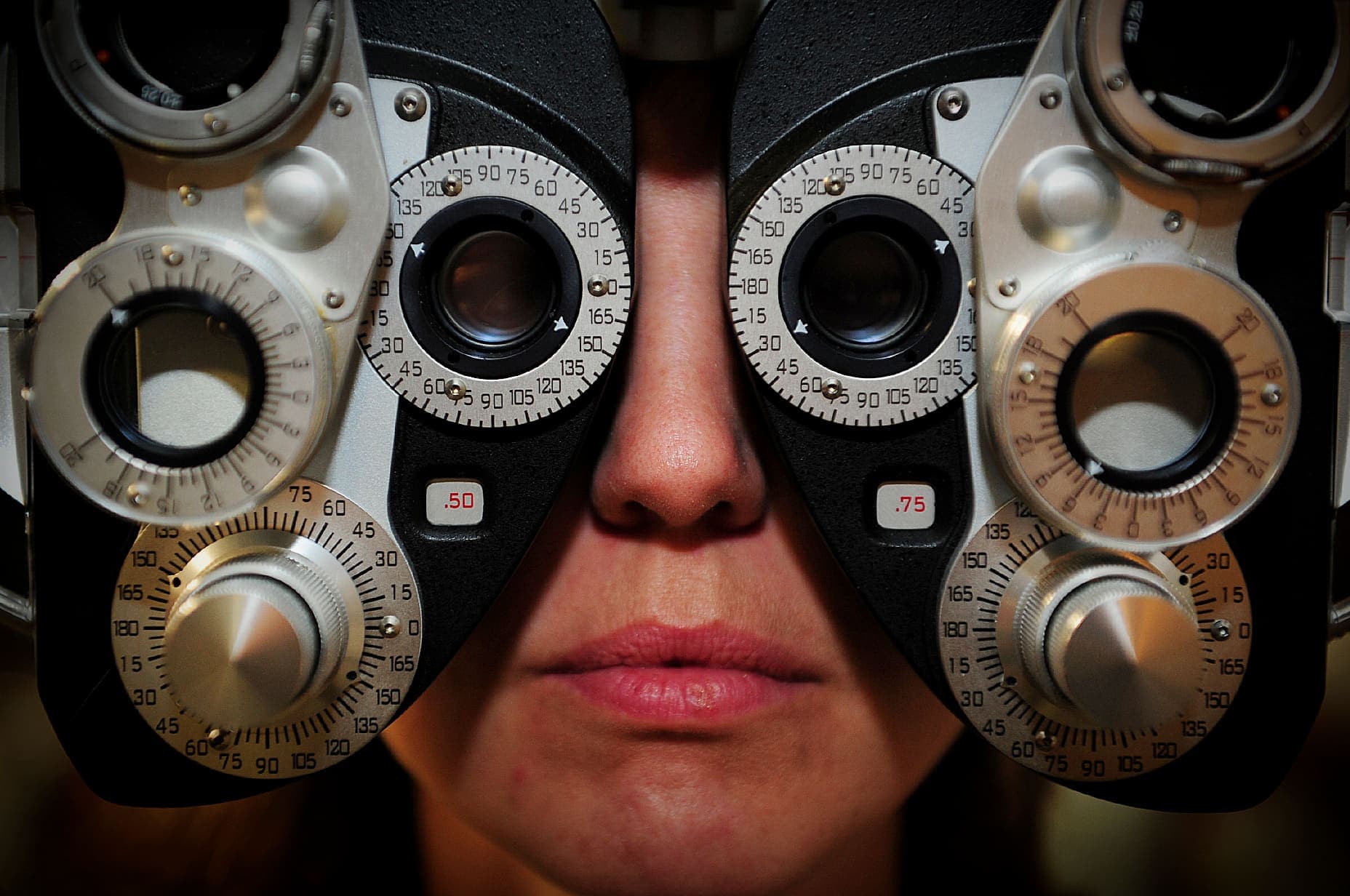

The numbers on your eyeglass prescription help us understand how your eyes see.
AXE (Axis): This number shows the orientation of your astigmatism. It takes a value between 0 and 180 degrees.
SPH (Sphere): This number shows whether you have a problem with distance or near vision. A (-) value means you have difficulty seeing far (myopia), and a (+) value means you have difficulty seeing near (hyperopia). If this field is blank or says “Plano”, you do not have a problem in this respect.
CYL (Cylinder): This number shows whether you have astigmatism. Astigmatism is a condition that affects both distance and near vision. If this field is blank, you do not have astigmatism.
An eyeglass prescription and a contact lens prescription are not the same. Because a contact lens sits directly on the surface of the eye, a contact lens prescription includes, in addition to the lens power (which may differ from your glasses prescription), extra parameters such as the lens curvature (base curve), diameter and lens type. For this reason, your contact lens prescription should not be derived directly from your eyeglass prescription; contact lens examination and fitting should be done by an eye doctor. The parameters on your eyeglass prescription describe the optical properties of your eye in detail.
People over 40 begin to have difficulty with near vision. You can correct this difficulty by using reading glasses, progressive glasses or contact lenses. The values given in the Distance field of your prescription refer to your distance vision, while the values given in the Near/Reading field refer to your near vision. The inability to see up close that everyone experiences after the age of 40 is called presbyopia. It should not be confused with hyperopia, which is difficulty seeing up close before the age of 40.
When you receive your eyeglass prescription, you may come across complex terms and abbreviations. Knowing what these terms mean is critically important for choosing and correctly using your lenses. Abbreviations such as SPH, CYL and AXIS ensure that your lenses are designed to suit your individual needs.
The SPH value shows the degree of myopia or hyperopia in your eye. This value expresses the amount of correction you need to see clearly. CYL indicates the level of your astigmatism, while AXIS indicates the orientation angle of the astigmatism. Knowing these terms is essential for choosing the right lenses.
Knowing what these terms mean allows you to make more informed decisions when choosing lenses. You can review your eyeglass prescription with your optometrist and choose the frames and lenses that will serve you best. In this way, you can minimize lost time and expense and enjoy healthy vision. Your optometrist's guidance plays a vital role in finding the safest and most accurate option.
The information on our website is not intended to direct individuals to any treatment. Do not take any diagnostic or treatment steps without consulting your doctor. The content does not contain information about İzmir Can Hastanesi's therapeutic healthcare services.