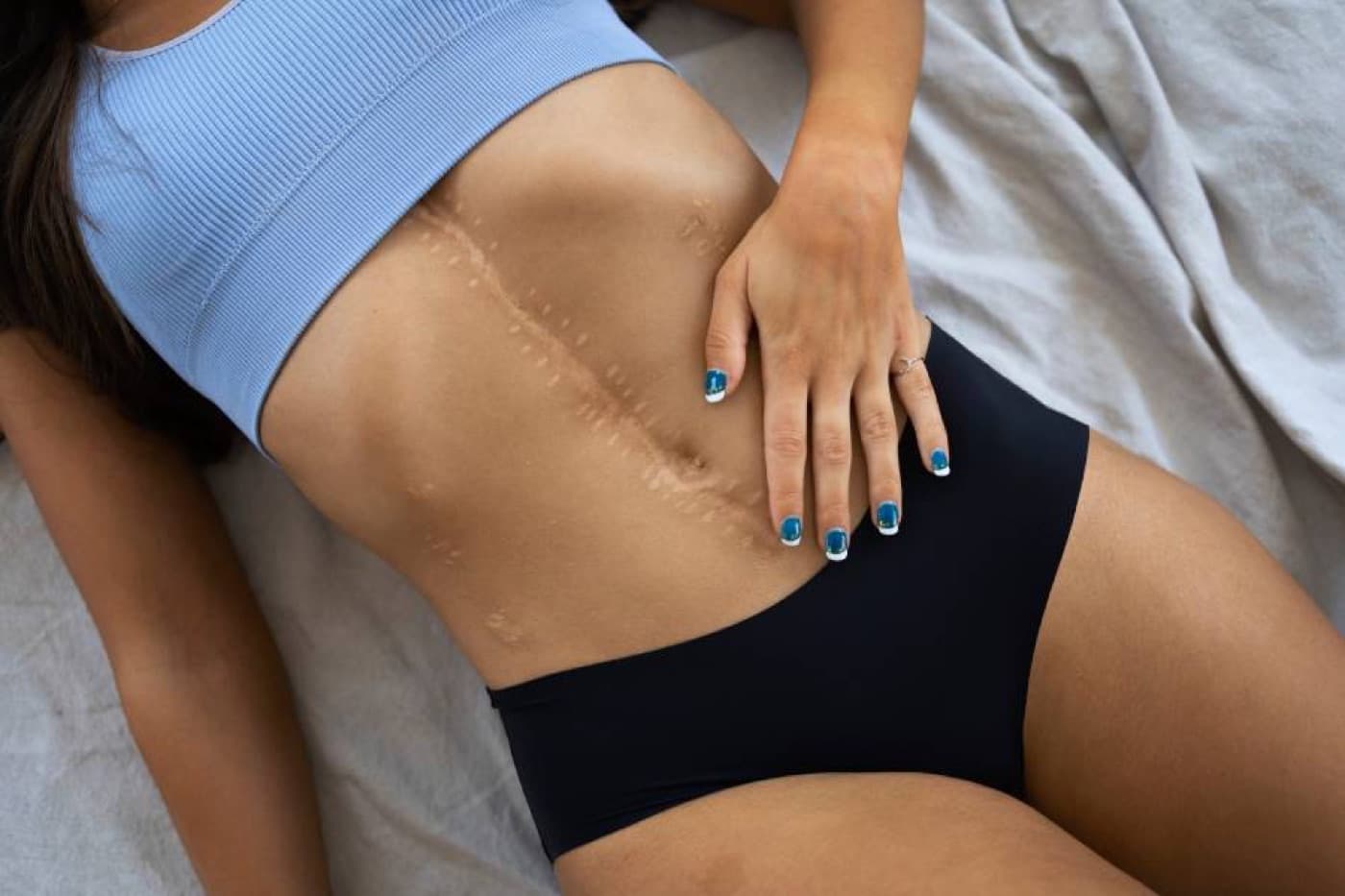
Abdominoplasty is a surgical procedure in which excess fat and sagging skin in the abdominal area are removed and the abdominal muscles are tightened and reinforced. It aims to achieve an aesthetic appearance by removing fat deposits concentrated in the middle and lower abdomen along with sagging, stretch-marked excess skin, and by making the abdominal muscles tighter. Overweight women and men with sagging abdominal skin who do not respond to diet and exercise are good candidates for this surgery.
It also covers deformities that develop in the lower body area after bariatric (weight-loss) surgery. Lower body complaints may take the form of excess fat tissue, laxity, or excess fat and skin. The quality of the skin and fat tissue envelope is also important. Pregnancy, significant weight gain and loss, and excessive stretching of the skin cause the skin–fat tissue envelope to lose its elasticity.
Mini-abdominoplasty can be performed in patients with minimal excess skin and fat below the navel and mild abdominal wall laxity in the same area. In these patients, the surgical goal is to eliminate laxity of the abdominal wall below the navel and the minimal excess skin and fatty tissue.
In abdominoplasty, the main goal is to correct excess fat above and below the navel, skin–fascia laxity and excess skin. When the existing deformity extends beyond the front of the abdomen, additional procedures are needed to correct all of the deformities. If there is only excess fat without ptosis (sagging) in areas such as the thighs, hips, flanks and waist, a better contour can be achieved by adding liposuction to the abdominoplasty. In addition, circumferential lipectomy can be performed in patients who have lost significant weight and have laxity and ptosis.
Lower body lift is performed for body sagging that develops in obese patients after diet or surgery. This procedure generally begins with correcting the appearance of the abdomen and hips in patients who have reached their target weight.
In the arms, deformities can develop after significant weight loss or due to age or fascial laxity. These may take the form of fat accumulation, skin laxity and sagging.
Who Is Abdominoplasty For?
- Cases where diet and exercise programs are not enough to eliminate abdominal fat and sagging skin
- Women whose abdominal area has become significantly deformed, especially after childbirth, are good candidates.
When Is Abdominoplasty Not Performed?
Patients who plan to have children in the future or to lose a significant amount of weight should postpone this surgery.
If sagging and laxity of the abdominal skin are not severe, mini-abdominoplasty procedures may be sufficient.
What to Do Before Abdominoplasty Surgery
- After a detailed examination and the necessary consultations, if there is nothing preventing your surgery, your aesthetic surgeon will inform you about possible risks, recovery times and what you need to do.
- If you smoke, you must stop at least 2 weeks before surgery. Of course, ideally you should quit smoking completely.
- If you have an infection such as the flu, the surgery should be postponed.
Surgical Procedures in Abdominoplasty
Full abdominoplasty is performed under general anesthesia. The operation takes about 2–5 hours, varying from person to person.
The procedure is usually performed through an incision between the hip bones in the groin area, placed so that it can be hidden under a bikini. Sometimes it may be necessary to reposition the navel. During the procedure, the sagging, deformed excess skin is freed and removed together with the excess fat tissue. The muscles of the front abdominal wall are brought together tightly. The operation is completed by placing temporary, thin drains to remove any fluid and blood that may collect in the surgical area.
What You May Experience After Abdominoplasty Surgery
Your hospital stay is 1–3 days. In the first days, you may have swelling and pain that can be relieved with pain relievers. The drains are removed within 2–3 days. Your stitches are removed after 12–15 days. In the first days, there may be some discharge from the surgical incision and small areas where the stitches open, but these heal quickly with daily dressings.
In the first days after surgery, we recommend leaning slightly forward when lying down or walking so that the incision area is not stretched. You can start light exercise from the second week and sports activities after the 3rd month.
The incision scar, which may resemble a cesarean section scar, approaches the color of your skin after 1 year and may become barely noticeable. After surgery, we recommend protecting yourself from the sun for a few days, avoiding dark clothing and using a protective cream.
Because we perform tummy tuck surgery in combination with liposuction, even if you gain some weight after surgery, your abdomen will not accumulate fat as it did before.
The information on our website is not intended to direct individuals to any treatment. Do not take any diagnostic or treatment steps without consulting your doctor. The content does not contain information about İzmir Can Hastanesi's therapeutic healthcare services.