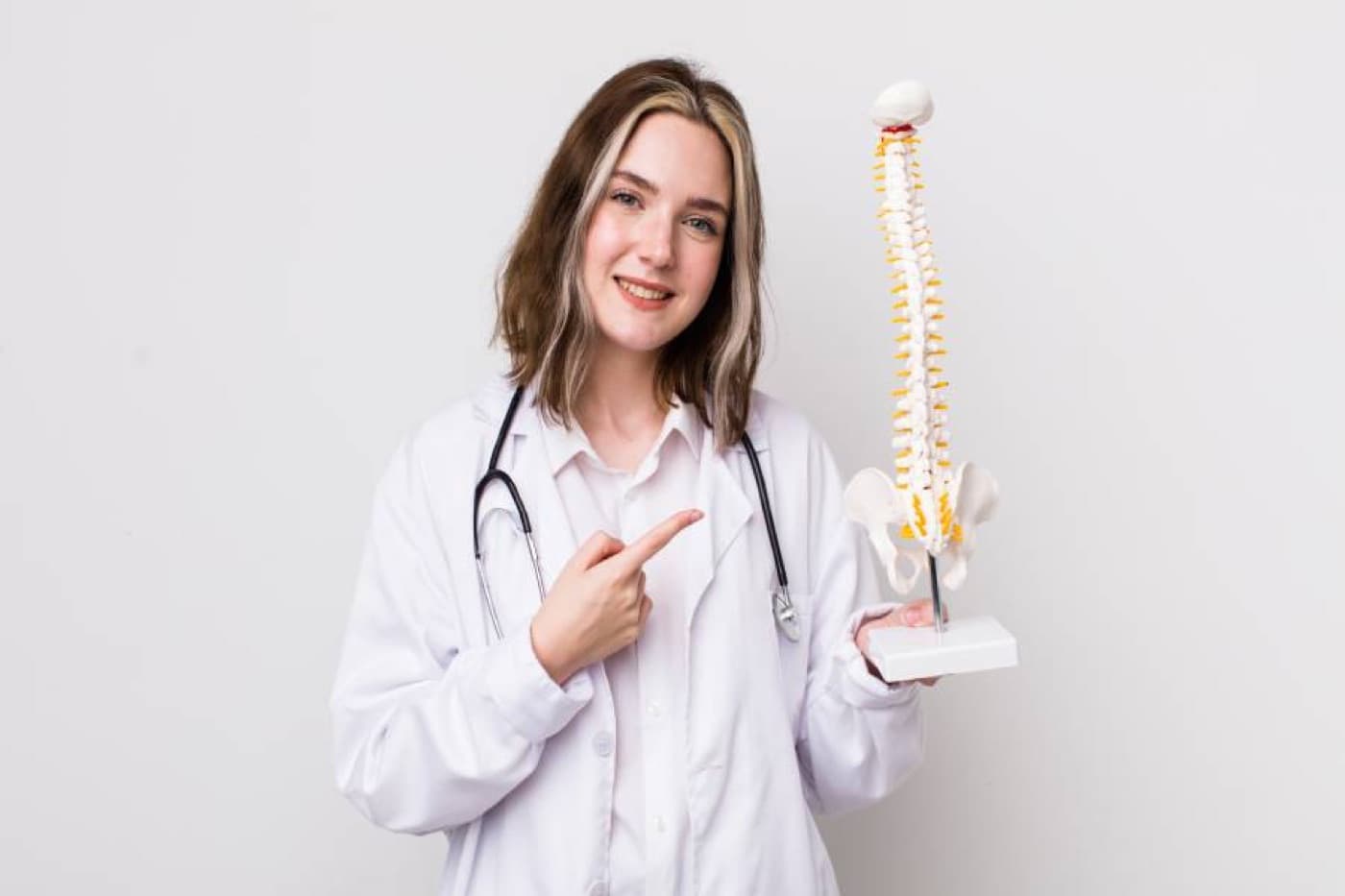
Neck pain is a very common problem. About 70% of people experience neck pain at least once in their lives. The neck is a highly mobile structure located between the immobile rib cage and the relatively heavy head. It holds vital structures together in a narrow space and, while allowing the head to make the necessary movements, provides mechanical support like a protective sheath. Because of its position and function, it is vulnerable to various kinds of trauma.
Common Causes of Neck Pain
1) Myofascial Pain Syndrome
This is a constant, deep, cramp-like pain. It may begin slowly and insidiously with repeated minor trauma and muscle fatigue, or suddenly after an injury. Psychological stress, sleep disturbances, cold and windy weather, and remaining in an unsuitable posture for long periods can act as triggers. It has recently become more common in parallel with the increasing time spent at the computer. Tension in the neck and shoulder muscles and the presence of taut bands and trigger points in the muscles are found during the examination.
2) Cervical Disc Disorders (Cervical Disc Herniations)
The main symptoms of a cervical disc disorder are pain and muscle spasm that occur when the gel-like disc between the vertebrae herniates and comes into contact with nerve structures. The pain is often stabbing, burning or aching. Pain that starts at the back of the neck and spreads to the shoulder and arm is sometimes mild in the neck and more severe in the arm. There may also be pain in the arm only. With prolonged nerve compression, sensory loss and muscle weakness may develop.
3) Cervical Facet Syndrome
Damage to the facet joints, which are located at the back of the spine in the neck and play an important role in neck movements, can cause neck pain. A sudden severe injury or repeated minor injuries over a long period can lead to joint damage. There is one-sided or two-sided pain at the back of the neck that radiates toward the head and increases with neck movements. The facet joints are tender to the touch.
4) Spondylosis
Wear and tear (degeneration) of the spine that develops with age is the most common cause of neck pain. It becomes more common after the age of 40.
5) Whiplash Injury
This is an injury caused by excessive backward and forward movement of the neck. It is most often seen in car accidents. As a result of excessive backward movement of the head, the ligaments and facet joints are damaged. In the first 24 hours after the injury, neck pain and headache, dizziness, loss of sensation and strength in the arms, difficulty swallowing, and visual and hearing disturbances may occur.
Treatment:
Painkillers and muscle relaxants may be used, provided they are not taken for more than two weeks. In cases of severe pain, corticosteroid treatment may be added. For neck pain whose severity cannot be controlled, certain antidepressant and anticonvulsant medications may be added to the treatment.
Physical Therapy and Rehabilitation
Physical therapy and rehabilitation are an important part of treatment.
First, the patient is informed about the natural course of the condition and its possible complications.
Superficial and deep heat therapy reduces muscle spasm and increases soft tissue flexibility and blood flow. This both reduces pain and starts the healing process.
Electrotherapy methods (such as TENS and vacuum therapy), thanks to their pain-relieving effects, reduce the use of medication and related complications.
Laser therapy has been shown in the medical literature to be effective in reducing pain.
Traction widens the nerve passages by separating the vertebrae from one another and contributes to the healing process by stretching the soft tissue structures.
After physical therapy modalities have been applied, the prepared soft tissues are included in an exercise program.
Many studies have found that patients with chronic neck pain have weaker neck muscles than people without neck pain. While exercise is effective in the short term through neural adaptation, changes in muscle tissue take longer.
The exercise program should include stretching, strengthening and endurance exercises.
Studies have shown that patients benefit more from exercises performed under supervision.
Supervised exercises performed immediately after physical therapy sessions provide the greatest benefit to the patient. Acupuncture and dry needling are other modalities used in treatment.
The information on our website is not intended to direct individuals to any treatment. Do not take any diagnostic or treatment steps without consulting your doctor. The content does not contain information about İzmir Can Hastanesi's therapeutic healthcare services.