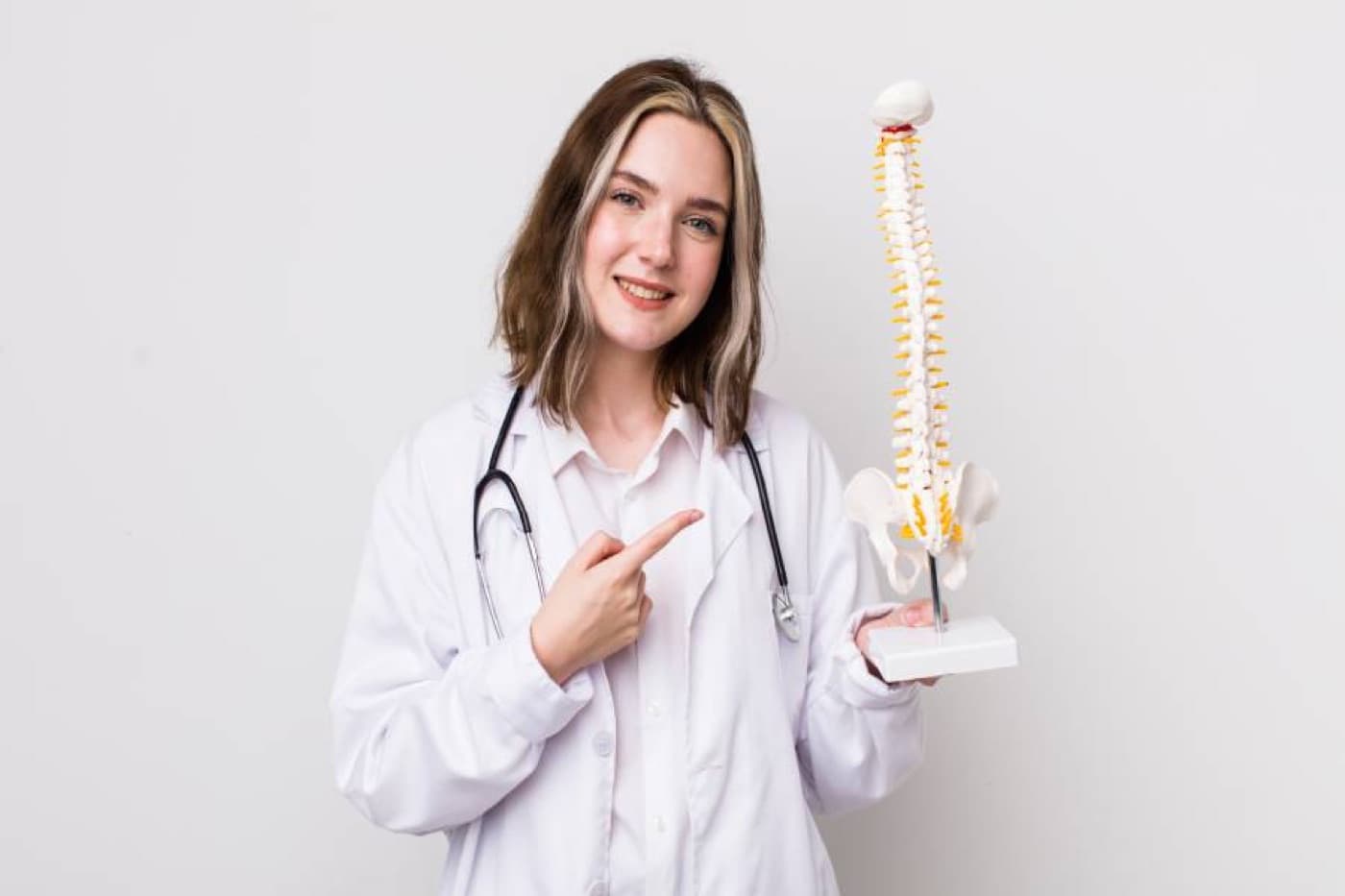
Scoliosis is a sideways curvature of the spine seen in the chest and/or lower back regions. It may occur on its own or together with kyphosis, which means a hunched back; this is called kyphoscoliosis. The condition is more common in girls. The period in which spinal curvature can progress most rapidly is the first five years of life.
Scoliosis develops for many different reasons. It may be congenital, of unknown cause, or related to infections or tumors. The types of scoliosis most commonly encountered in daily life are idiopathic and congenital scoliosis. Idiopathic scoliosis is the type that usually appears around the age of 10 and whose cause is not yet fully understood. Congenital scoliosis arises from factors in the womb and shows signs from birth. Infections during pregnancy, diabetes and certain vitamin deficiencies are thought to be contributing factors.
Types of scoliosis by frequency
- Idiopathic Scoliosis (scoliosis of unknown cause): The sideways curvature of the spine may be ‘S’-shaped or ‘C’-shaped. In addition to the sideways curvature, the vertebrae may also rotate around their own axis.
- Neuromuscular Scoliosis: The main causes include muscle or nerve diseases.
Nerve diseases may originate in the brain and spinal cord; muscle diseases may appear in childhood or later in life. Surgical intervention may be necessary at a young age as part of the treatment.
- Congenital Scoliosis: This type is caused by spinal
anomalies that develop while the baby is growing in the womb. Treatment may require surgical intervention at a young age.
Symptoms of Scoliosis
A spinal deformity should be suspected if there is asymmetry in a person's waist or back, if one shoulder is higher than the other, if one shoulder blade sticks out or is more prominent than the other when viewed from behind, if one leg appears longer than the other, if the trunk or rib cage appears shifted to one side, if the ribs on one side of the body stay higher than the other side when the person bends forward, or if clothes always hang asymmetrically on the person.
Main symptoms of scoliosis
- Sideways curvature of the spine, to the right or left
- Sideways and forward curvature of the spine
- One shoulder (right or left) moving forward
- Shoulders and hips that are not symmetrical
- A second curve compensating for the first curve
- Upper back, lower back and shoulder pain
- A visible curve in the spine
- Asymmetry in the shoulders and hips
- Difficulty standing upright
- Problems with walking
- Clothes not fitting the body properly
- Shortness of breath
- Fatigue
Diagnosis of Scoliosis
Diagnosis is based on examination findings and radiological studies (X-ray, magnetic resonance imaging, computed tomography, etc.). Imaging methods are also used to grade scoliosis; computed tomography, radiography and MRI are among the methods used to calculate the degree of curvature. Spinal X-rays taken in different positions (front-to-back, from the side, while bending sideways, etc.) and scoliometer measurements (a device that measures the amount of curvature of the spine) are diagnostic methods used to determine the extent of scoliosis.
During the physical examination, the curvature becomes more noticeable when the patient bends forward than in the standing position.
Treatment of Scoliosis
Untreated scoliosis can lead to other health problems.
For the diagnosis and treatment of scoliosis, you should consult the Orthopedics department.
School screenings are very important for the early diagnosis of scoliosis.
Early detection of scoliosis and referral of the patient to a specialist are essential. Early detection can allow treatment without surgical intervention and makes a successful outcome possible. Factors that affect treatment include the patient's age, the degree and location of the curvature, the severity of pain in adults, physical examination and imaging findings, any increase in the degree of curvature over time, the type of scoliosis, the presence of other conditions and the stage of bone growth. A personalized treatment program should be determined for each person; patients should not simply be sent home with an exercise program, and there should be cooperation with the patient and family throughout treatment. Treatment includes observation, brace treatment, physical therapy and surgery.
Observation and follow-up: For very mild curves, special treatment is usually not needed. The child is followed up at regular intervals of a certain number of months, taking the child's age into account.
Brace: For moderate scoliosis, brace treatment may be recommended, taking the child's age into account. This treatment can be used in children who are still growing. The aim is not so much to correct the curve with a brace as to stop it from progressing, preventing severe scoliosis from developing and avoiding the need for surgery.
Surgery: Surgical treatment is required for severe scoliosis, that is, when growth is continuing and the curve exceeds 40 degrees (>40°).
What Scoliosis Patients Should Keep in Mind
- Avoid very strenuous exercise
- Stay away from demanding sports activities that may put pressure on the spine, such as long-distance running or horseback riding
- People who have had scoliosis surgery should avoid high-contact sports that may cause injury
- Avoid working at a desk for very long periods
- To keep lower and upper back pain from getting worse, it is recommended not to lie on your stomach and not to use too many pillows while sleeping
- Swimming, yoga and Pilates can be effective in the treatment of scoliosis.
The information on our website is not intended to direct individuals to any treatment. Do not take any diagnostic or treatment steps without consulting your doctor. The content does not contain information about İzmir Can Hastanesi's therapeutic healthcare services.